

Marine Plywood vs. Pressure Treated Wood: The South Florida Guide
South Florida throws two of the toughest conditions at wood — saltwater and humidity. Whether you’re building a dock, fitting out a boat, or tackling an exterior marine project, picking the wrong material is an expensive mistake. After 40+ years supplying the South Florida marine and construction industries, International Plywood & Lumber breaks down exactly when to use marine plywood, when pressure treated is the right call, and when you should never mix them up.
What Is Marine Plywood?
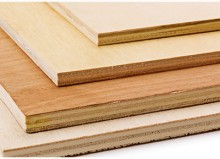
Marine plywood is not a marketing term — it’s a certified product. True marine-grade plywood is manufactured to the BS-1088 standard, a British Standard that sets strict requirements across every layer of the panel:
- Void-free core: No gaps, knots, or voids through any ply. This is the defining difference from construction-grade plywood — a void inside the panel collects water and becomes a rot pocket.
- Waterproof glue: BS-1088 requires Type WBP (Weather and Boil Proof) adhesive throughout. The bond will not delaminate from water exposure.
- Clean face veneers: No patches, no repairs, no defects on face or back. The panel is finish-ready as delivered.
- Consistent thickness: Tight tolerances across the sheet — critical for boat building where component fit drives structural integrity.
Two species dominate BS-1088 marine plywood for South Florida applications:
- Okoume: An African hardwood prized for its low weight and excellent workability. The first choice for boat hulls, interior cabin panels, and any application where weight savings matter. Okoume glues, routes, and finishes cleanly.
- Meranti: Denser and harder than Okoume. Better suited to exterior applications, transom boards, and situations where impact resistance outweighs weight considerations.
What marine plywood is NOT: The “marine plywood” sold at big-box home improvement stores is typically a marketing label applied to exterior-grade plywood with a cleaner face. It is not BS-1088 certified, the core may contain voids, and the adhesive may not meet true waterproof standards. For boat building or any structural marine application, that distinction matters — and it will show up as a failure in South Florida’s conditions.
Best uses for marine grade plywood in South Florida: boat hulls, interior cabin panels, deck substructure, hatch covers, transom boards, and any panel application where weight, workability, and water resistance must all be present simultaneously.
What Is Pressure Treated Wood?
Pressure treated (PT) lumber is dimensional lumber — framing stock, boards, and timbers — that has been injected with chemical preservatives under pressure so the compounds penetrate deep into the wood fibers. The preservatives (most commonly ACQ — Alkaline Copper Quaternary — or copper azole) make the wood resistant to rot, fungal decay, and insect damage.
PT lumber is sold in use classification grades that matter significantly in South Florida’s environment:
- UC3B (Above Ground): For wood in contact with weather but not ground or water. Decking boards, railings, fencing.
- UC4A / UC4B (Ground Contact): For wood in direct contact with soil or concrete. Posts, sill plates, landscape timbers.
- UC5A / UC5B (Marine / Saltwater): The highest treatment level. Required for pilings, dock framing, and any structural member in continuous contact with saltwater or brackish water. If you’re building a dock in South Florida and using anything below UC5A for submerged or splash-zone members, it will fail ahead of schedule.
The key structural point: pressure treated is lumber. It is a framing and structural product — posts, beams, joists, pilings, ledgers. It is not a panel product and does not substitute for plywood in any application where sheet goods are required.
Where PT does not belong: interior boat components, finished surfaces, anywhere cosmetic appearance matters. The greenish tint from preservatives, the rough surface texture, and the chemical exposure make it unsuitable for any finished or interior application.
Marine Plywood vs. Pressure Treated — Head to Head
| Feature | Marine Plywood (BS-1088) | Pressure Treated Lumber |
|---|---|---|
| Material type | Panel (sheet good) | Dimensional lumber |
| Primary use | Boat building, marine interiors | Structural framing, docks, decks |
| Water resistance | High — waterproof glue, sealed veneers | High — chemical preservative treatment |
| Weight | Lightweight (Okoume especially) | Heavier than untreated |
| Machinability | Excellent — routes, cuts, sands cleanly | Good — but saw blades dull faster |
| Appearance | Clean, finish-ready face | Rough, greenish tint from preservatives |
| Chemical exposure | None | Copper-based preservatives (corrosive to aluminum and steel fasteners) |
| Cost | Higher per sheet | Lower per linear foot |
| Where to use together | Marine plywood decking surface over PT framing | PT framing as substrate under marine ply panels |
South Florida-Specific Considerations
South Florida’s environment is not the same as coastal New England or the Pacific Northwest. The combination of saltwater, year-round heat, high UV index, hurricane wind loads, and endemic subterranean termites creates a set of conditions that punishes material selection errors faster than almost anywhere else in the country.
Saltwater Is More Aggressive Than Freshwater
Salt accelerates both biological decay and chemical corrosion. Submerged dock pilings in Biscayne Bay degrade faster than equivalent freshwater lake pilings. Marine plywood used in saltwater applications must be fully encapsulated — epoxy-sealed on all faces and edges — not just topcoated. Any exposed end grain is an entry point for saltwater penetration.
Miami-Dade Hurricane Code Requirements
Miami-Dade County operates under some of the most stringent building codes in the United States, directly driven by hurricane risk. For dock and deck framing, pressure treated lumber at appropriate UC ratings is typically required by code for structural members. If you’re pulling a permit for a dock build in Miami-Dade or Broward, confirm UC5A/5B ratings for any member in the splash zone or submerged — code compliance is not optional and inspectors know the difference.
Copper Corrosion and Fastener Selection
This is the detail that catches contractors and DIYers off guard most often: the copper-based preservatives in ACQ and copper azole treated lumber are highly corrosive to standard steel fasteners. Standard zinc-plated screws and nails will corrode rapidly in contact with PT lumber in a wet environment. In South Florida’s saltwater conditions, that timeline is compressed further. The rule is non-negotiable: use hot-dipped galvanized or stainless steel fasteners throughout any PT lumber assembly. This applies to joist hangers, ledger bolts, decking screws, and any aluminum hardware in contact with PT framing.
UV and Humidity: Surface Degradation
South Florida’s UV index is among the highest in the continental US. Unprotected wood surfaces — marine plywood included — will check, gray, and degrade within a single season without proper topcoating. Marine plywood should always be epoxy-sealed and finished with a UV-resistant paint or varnish system. The epoxy is structural protection; the topcoat protects the epoxy from UV breakdown. Skipping either step shortens service life dramatically.
Subterranean Termites
South Florida hosts aggressive subterranean termite populations, including the Formosan subterranean termite. Pressure treated lumber at ground contact grades (UC4A/4B and above) provides meaningful protection against subterranean termite attack. Marine plywood does not. For any application with ground contact or in proximity to soil, PT treatment is a critical line of defense that marine plywood cannot provide on its own.
Common South Florida Applications — Which Material to Use
Here’s the short version for the most common marine and waterfront build scenarios in Miami-Dade and Broward:
- Building a boat hull or transom: Marine plywood — Okoume BS-1088. No debate. PT lumber has no place in a boat hull.
- Dock decking surface: Marine plywood or composite decking over a pressure treated framing system. Marine ply gives a workable, finish-ready deck surface; PT handles the structure underneath.
- Dock framing, joists, and pilings: Pressure treated, UC5A minimum for saltwater immersion and splash zones. This is the structural backbone — spec it right.
- Seawall cap: Pressure treated ground contact, UC4B minimum. The cap takes direct water and weather exposure continuously.
- Boat interior cabin panels: Marine plywood. PT has no place inside a boat — the appearance, weight, and chemical exposure are all wrong for the application.
- Exterior hatch covers: Marine plywood, epoxy-sealed on all surfaces and edges, finished with a UV-resistant topcoat. No shortcuts on the sealing.
- Stairway or ramp structure on a dock: PT framing for the structural members; marine ply or composite for the tread surface where appearance and traction matter.
What We Stock at International Plywood & Lumber
Our specialty is the premium marine panel products that you can’t source reliably from a big-box store or a general lumber yard. Current stock includes:
- Marine plywood: Okoume and Meranti, BS-1088 certified, 4×8 sheets in 1/4″, 3/8″, 1/2″, 5/8″, and 3/4″ thicknesses. These are not big-box approximations — they are certified marine panels.
- Hardwood lumber including mahogany: Traditional boat building species for framing, trim, and interior components where marine plywood transitions to solid wood.
- Same-day delivery with forklift-equipped trucks to your marina, boatyard, or jobsite anywhere in Miami-Dade and Broward counties.
We do not stock pressure treated lumber — it is a commodity product available at every home center and general lumber yard in South Florida. Our focus is on the hard-to-find premium marine panel products that require a specialist supplier. When you need BS-1088 certified Okoume or Meranti in the right thickness, on short notice, with reliable delivery to a marina or boatyard, that’s exactly what we do.
Call (305) 884-0860 for current marine plywood stock, pricing, and delivery availability.
Marine plywood and pressure treated wood solve different problems — and the best South Florida builds use both correctly. PT lumber handles structural framing, ground contact, pilings, and anywhere chemical preservative protection is the primary requirement. Marine plywood handles everything that needs to be lightweight, finished, workable, and waterproof at the panel level. In South Florida’s saltwater environment, using the wrong material doesn’t just look bad — it fails fast and costs double to fix. International Plywood & Lumber has been supplying marine-grade panels to South Florida’s boatbuilders and marine contractors since 1983. Contact us before you buy.
Request a Quote
Ready to order or need pricing? Fill out the form below and our team will get back to you within 2 business hours (Mon–Fri, 7:30 AM – 4:00 PM). Or call us directly at (305) 884-0860.